Wednesday, 31 January 2018

The Monthly Ledger: January 2017

Hello!

I hope you're doing well! I've just finished school (I miss it already!) and I can already see the light at the end of the terrifying tunnel of US college admissions! UK and Canada awaits, so I shall stall no longer with this month's reads!


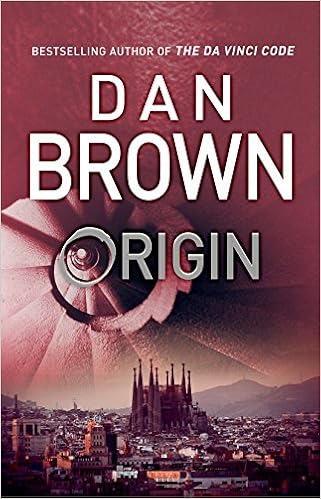
          1. Origin by Dan Brown - finished 28/12/2017

Image result for dan brown originI mean, need I say anything? I've been a long-time lover of Dan Brown and have found no other author that can meld mystery and fact together so skillfully.
Origin begins with Robert going to the tech-prophet Edmond Kirsh's (a genius that can predict the future with statistics and computing - go data science and analytics!) unveiling of a presentation that could potentially destroy religion by presenting solid evidence that could upend the fundamental laws of all world religions. On the day of the presentation, however (perhaps a little bit too predictably) Edmond Kirsh is shot. The story then follows Robert Langdon and Ambra Vidal, who helped organize Kirsh's presentation, as they try to unveil Edmond Kirsh's secret.

Edmond Kirsch is definitely one of my favourite characters from the Dan Brown series. His flair for the dramatic, his combined love for poetry and computing, his open hate derision of religion make him an interesting, varied character. I also liked how Dan Brown didn't completely stereotype him - Edmond Kirch was a tousled hair, sarastic-t-shirt wearing, unassuming genius at college, but is now a fashion-savvy, 'totally hip' man that knows how to ruffle the feathers of the masses (Elon Muskian, in my opinion)

And as always, I loved the references to poems of yore, the description of Guggenheim and other tourist sites, the sheer amount of information about everything, the omnipresent symbols and the intellectual discussions between the main characters, particularly one between Langdon and the priest of Sagrada Familia - the conversation was purely intellectual and academic from both sides, with no fierce emotion clouding rationality - I liked that. 

On the other hand, I felt Dan Brown went overboard with the descriptions that is annoying when all the reader wants is action. Some of the characters, despite being very informed and 'intellectual', seem to forget simple bits of information at crucial times. The plot was also quite predictable: 24-hour treasure hunt set in an exotic location (mostly European/Middle East) as Robert is being hunted by said exotic location's goverment while he runs around, trying to crack the code with an exotic beauty (in this case, Spanish). 

Quite unlike his previous novels, Langdon takes a backseat in terms of knowledge in this book, probably because it has a lot of technology in it. 

Origin maybe isn't Dan Brown's best work, but having been starved of a book for four insufferable years, it was reliving to meet Robert Langdon in another mindblowing thriller again.

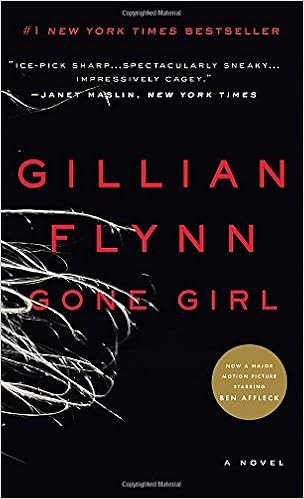
           2.  Gone Girl by Gilian Flynn - finished 07/01/2018

Image result for gone girl book
My list of psychopathic books is limited to only two- The Shining, The Girl With The Dragon Tattoo (and the farmhouse part from The Girl who Played with Fire). 

Gone Girl is another addition to my short, I-hope-I-don't-read-this-kind-of-thing-anymore-oh-wait-I-will list of books. When my friends told me this was disturbing, I never imagined the extent to which it would ravage my sanity. Gone Girl was chilling, disturbing, traumatizing and definitely, entertaining. 

The book revolves around Amy and Nick, unhappily married, unhappy because when they met, both of them pretended to be 'cool' to impress each other. It's this effort to impress that leads to an initially happy marriage, and soon, an alleged murder, frame-up, a righteous vendetta, actual murder and an alleged-kidnap-and-murder and a psychotic sociopath that is downright scary.


A quick punctuated list of Gone Girl's highlights:
  1. Amy and Nick - what a clever choice of names to contrast a story so insidious. Just your average Nick and your average Amy. 
  2. The book, like many, intelligently portrays that justice is largely determined by society - there's no 'right' or 'wrong', just 'what does the public think'. Towards the end, when a character is (wrongly) thought to be blameless and another wants to convict (spoiler alert) her, a police officer says it isn't possible, because it's all about 'what the public opinion is' (not verbatim). This malleability of justice is liberating in some cases - it has what made homosexuality, which was previously considered criminal, to be legal. In other cases, this malleability could be exploited by criminals that have actually committed a crime like murder or rape (which have always  been considered a crime in nearly all societies - should even this change in the future, we know we've hit rock-bottom) because public opinion is always driven by emotions and TRP ratings, not the truth. 
  3. The uncannily persuasive narrative writing style. Flynn's writing style literally messed up my sense of judgment - it takes advantage of our prejudices, our lack of knowledge of our lack of knowledge. Insanely clever. 
  4. At a point in the novel, we find out that it was Amy's 'Cool Girl' persona that initially drew Nick to her. It really made me think of personality standards, as I had discussed (ranted?) in the previous post. Amy complains of how men prefer the 'Cool Girl' - young, funny, attractive, easy-to-maintain, light-hearted and undemanding. As though men want an undemanding creature for their entertainment, not recognizing that the creature is an entirely separate being, a woman, who can be grim, demanding, attention-seeking, dramatic, high-maintenence if she goddamn wants to. And for that reason, I understood Amy and her (spoiler alert, sort of) God-like dole out of punishments. 
And with that, I give you January!

Goodbye!

Monday, 18 December 2017

Magical Creatures, Instagram Captions and Romanticism

Twenty-first century poetry sings,
ardently designs the elusive 'she'
She, the dreamy fighter,
the wondrous traveler,
the unimaginable lover,
the magnificent conqueror,
a perfect, aesthetic woman, girl,
that fulfills the longings of
digital hearts.

Beauty standards?
To hell with it!
Let's set personality standards instead.
Let's create a fantasical creature,
with cheesy quotes and unmeaning words,
now girls have to change their personality instead.

Go, now,
become the girl with demon wings and starry eyes,
become the girl that fights to death and silently cries,
become the girl that displays strength but is weak inside.
no, learning coding isn't magical enough,
no, displaying your emotions isn't elusive enough,
no, wanting to bake isn't wild enough.

Mind, Instapoets, 'she' is a representation of
our depression, anger and longing,
emotions that are forever bound by ever-pervasive isolation,
and while you submit to 'her' so willfully,
care before you sacrifice reality for inspiration.

***

I'll admit it, I like poems about the 'she' too. They sound exotic and otherworldly. They give me a fantasical 'role model' to follow in a life dictated by college admissions and academic credentials (nothing wrong with that I guess :P). The words are powerful: they are sweet to my ears, soothing to my heart and invigorating to my mind.

This one, for instance (and for obvious reasons), was a memorable quote:

Image result for poems she

However, I began to have second thoughts when I began to see kids using these as their Instagram captions. Ten more posts captioned the same way, and it became annoying, but I couldn't exactly put my finger on what was it about this 'she' that began to annoy me - this 'she' was beautiful, daring and exotic and even I  admired her, so what's so different about it when kids younger than me begin to talk about her?

You see, what is odd with 'she' is that this creation glorifies sadness. It makes being depressed, lonely and elusive a beautiful, exotic and fearless thing to be. Crying behind closed doors, instead of seeking help, is lovely. Putting up an energetic, social persona, and crumbling behind curtains, is appealing. Being this messy, deep, dark girl that doesn't utter her deepest desires and acts them out through wildness is fashionable.

And when young teenagers are exposed to this kind of personification (without the context of a novel, unlike the Dean Koontz quote above), while the extent to which it can be dangerous is questionable, it would somewhat alter their idea of practicality. Being practical and responsible would be (and in fact, is) regarded as boring; being reckless, wild and full of fun (nothing wrong with a little bit of each though) would be the 'it' thing. This reminds of the Romantic era (refer Sophie's World book review) when inspiration and star-crossed love was glorified - perhaps it must be mentioned that in conjunction with the rise of romantic philosophers, suicide rates skyrocketed too. It still remains one of my favourite eras though.

On a deeper level, we could ask why we want to be romantic, why we like fantasy and magic, why we don't like practicality and empiricism. As Camus says in 'The Myth of Sisyphus' - without romanticizing things, life becomes stripped of all meaning and we find living to be indefinite and unworthy of living. (On a side note, The Myth of Sisyphus is an interesting read - it discusses if realizing life is meaningless necessitates suicide).

Though this may be a very small 'issue', and definitely a privileged, first-world one, it is something that has troubled my mind countless times.

Tell me what you think?

Friday, 17 November 2017

Primordial Emotions

 An interesting article from the online magazine TeenInk: 

"Use a Simpler Word in a Complicated Word's Place

English has a wonderful dual heritage. At its core there is a duality, a choice, between its formal, official Latinate roots, with its information, transubstantiation, and nutrition; and its earthy, warlike, immediate Germanic roots, with its knowledge, God, and bread. The Germanic words often hit us on a stronger, more emotional level. They are words that are more connected to our immediate needs for survival. They are the words that tell us about blood, food, and love, not lacerations, nourishment, and amorousness. One teacher of mine called these words, the types that refer to our most basic human desires and instincts, as primordial words. They are words that were in us before words even existed. If you think that's a contradiction, just don't overthink it. The goal of this exercise is to stop overthinking.

At moments of great importance or emotion in books, you'll notice how everything gets simple, and writers return to primordial words to describe things. They are much more effective, more timeless, more human. The other words have their place, but they are fussy and distant. It's easy for you to switch them out at key points in your story, and they'll immediately give you a jolt of something both more vivid and more spiritual. These words feel more essential to our humanness. So when your character is dying or loving or weeping, remember these words, and use them liberally. Strike out the anxious, intellectual Latin."
 "Writers return to primordial words to describe things"
Please note that all credits go the author H. Blair*


***

It is quite comforting to know that no matter how much humanity advances, no matter how 'un-humanlike' we may become with our increasing isolation, no matter how many lines we cross to create a utopian society, concepts like 'love', 'hunger' and 'blood' will always be our base instincts. It truly shows that we could go a full circle back to our primal instincts. There are countless articles claiming that we live in the most peaceful time of humanity, which I personally agree with, but I believe humanity yearns for the innocence of its ancestors as an adult does for her childhood.

*From: "Teen Ink | Use A Simpler Word - Teen Ink Weekly." Teenink.Com, 2017, http://www.teenink.com/Weekly/2017-10-24-article.

Friday, 27 October 2017

IB is the Thing with Feathers

IB is the thing with feathers, that clings to the soul
and screeches the tune with all the words and never stops at all.

- I'm just kidding!

Tuesday, 10 October 2017

Self-Made Dreams

A boiling kettle of frothy milk ready to spill over,
Anger ready to burst from the veins,
Dim resignation to life's challenges, 
Mindless stomping through lifeless days,
Quiet contemplation of ending it all,
Fear bursting from hastily-stitched seams,
Too nervous to rhyme properly,
Too busy to properly rhyme,
Fear, fear of living a normal life,
Tired, tired to live an extraordinary one,
Such is the life of a mere 16-year-old,
Barely begun with life,
contemplating termination already,
with all the pressure of self-made dreams.

**
A small piece I wrote on the 25th of May that I was extremely hesitant to post. But hey, in the words of Joseph Reaux, 'Poetry is truth in its Sunday clothesand Sunday clothes are rarely a feast for the eyes, are they? 

In any case, reader, hopefully, I will stop writing poetry positively dripping with teen angst and emotion - it really ruins the vibe of this blog.

Saturday, 16 September 2017

The Monthly Ledger: September 2017

Perhaps I should make these yearly ledgers.

Hullo, hullo!

How are you? This month, I have been up to my nose in homework and deadlines (interesting etymology - do google it!) but still snatched some time during the travel home, during dinner or borrowed some (very) expensive sleep time to read a few books.

Now, I've got some good news and bad news. The good news is that I will be finishing school in about 2 months, and after that, I will sell my soul to liven this blog. The bad news is that I've got two more months of school, during which I'm probably going to forget that I have a blog. Let's hope that the time I finally go back to regular posts (remember the Friday Posts Oath?), I will still have some soul and spirit.

Anyway, here are some quick comments on two great books I read over the past few months:

1) Love, Aubrey by Suzanne LaFleur

Love, AubreyAn upset me picked up this for need of a book without war and destruction (and it had a goodreads rating of 4.2). It turned out to be a light, poignant read and ended up with me being more upset than when I started it. The writing style was very relaxing, and LaFleur has very intelligently places stylistic elements (like letters, events) so that they struck a definitive, emotional chord within the reader. The part about (spolier alert) a dead sister made me tear up (I've a little sister too, oops), especially because LaFleur skillfully protrayed the purity and innocence of the sisters' relationship. However, it isn't a very fast-paced plot and I would recommend this only to those who are expecting a deeply reflective, slow-paced plot set in the country.


Overall Rating: 3.5/5


2) Women of Iron, by Catherine King

Women of IronNo other feminist book have I read (except for the Memoirs of a Geisha) has portrayed the women in such a blaringly harsh and raw manner. Set in England during the Industrial Revolution, it follows the story of Lissie, an beautiful orphaned bastard of pure, noble blood, who is sold to a conniving trader. A jarring turn of events ends with her rape, betrayal by her love interest and the death of her a father, the only person who truly cared for her. Women of Iron was truthful through and through and despite the happy ending for the protagonist, the emotional growth she undergoes with a series of brutal betrayals and rape makes her deserving of it. The only downside to this book was that some parts of it were unnecessarily long and dragged out, making it rather boring sometimes (and it wasn't worth the valuable sleep-time I had borrowed). I also wouldn't call it an entertaining read, but a book that has to be read purely for the sake of knowing.

Overall: 3.5/5


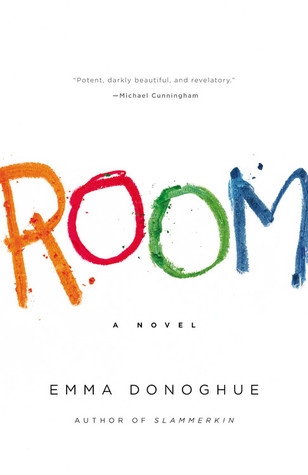
3) Room, by Emma Donoghue


Room
Overall: 4/5


AND A BOOK EXHIBITION!

There happened to be a book sale in my city (!) and I bought books worth a few thousand rupees. I will review these once I work off my sleep debt.


  • Love, Aubrey by Suzanne LaFleur
  • Women of Iron, by Catherine King
  • Princess, by Jean Sasson
  • Room, by Emma Donoghue
  • The Pact, by Jodi Picoult
  • Spirit Walker, by Michelle Paver
  • Gone Girl, by Gillian Flynn (Yes, I haven't read it yet)
Until next time, reader!

Tuesday, 22 August 2017

Gingerbread

There's a piece by that adamant mountain,
one by that sparkling river,
one in that water nymph's hair
one by that unrhyming canyon.

A piece of me all over the world,
a jack in all trades,
ought to mean that I own the golden eggs,
O Boy, it appears that I forgot another rhyme.

As words drop our syllable by syllable,
mind, not on the page, dear reader,
old fluidity long bygone,
replaced by that empty rock, yes,
the one right there.

Hope is the thing with feathers,
that perches in the soul,
but when your soul is
tried up tufts of hair
rolling across the African savannah,
oops, there goes my rhyme and reason.

Over the course of lines few,
I have lost pieces and rhyme,
reason and time.
Nevermore, mind.

- Lynn Gweeny

The randomness of this piece never fails to amuse me.